


What Do the Quotation Marks Mean in the ‘Wuthering Heights’ Movie Title? Emerald Fennell Explains
What To Know
- Emerald Fennell’s upcoming adaptation of “Wuthering Heights” uses quotation marks in the title.
- After great speculation, Fennell broke her silence on what the quotation marks mean for the adaptation.
- The film stars Jacob Elordi as Heathcliff and Margot Robbie as Catherine.
From the moment it was announced, it was clear that Emerald Fennell‘s lust-soaked, Charli XCX-fueled take on Wuthering Heights wouldn’t be a word-for-word replica of the time-honored gothic novel. But, if you ask us, Wuthering Heights isn’t your average love story, so it deserves more than another average adaptation.
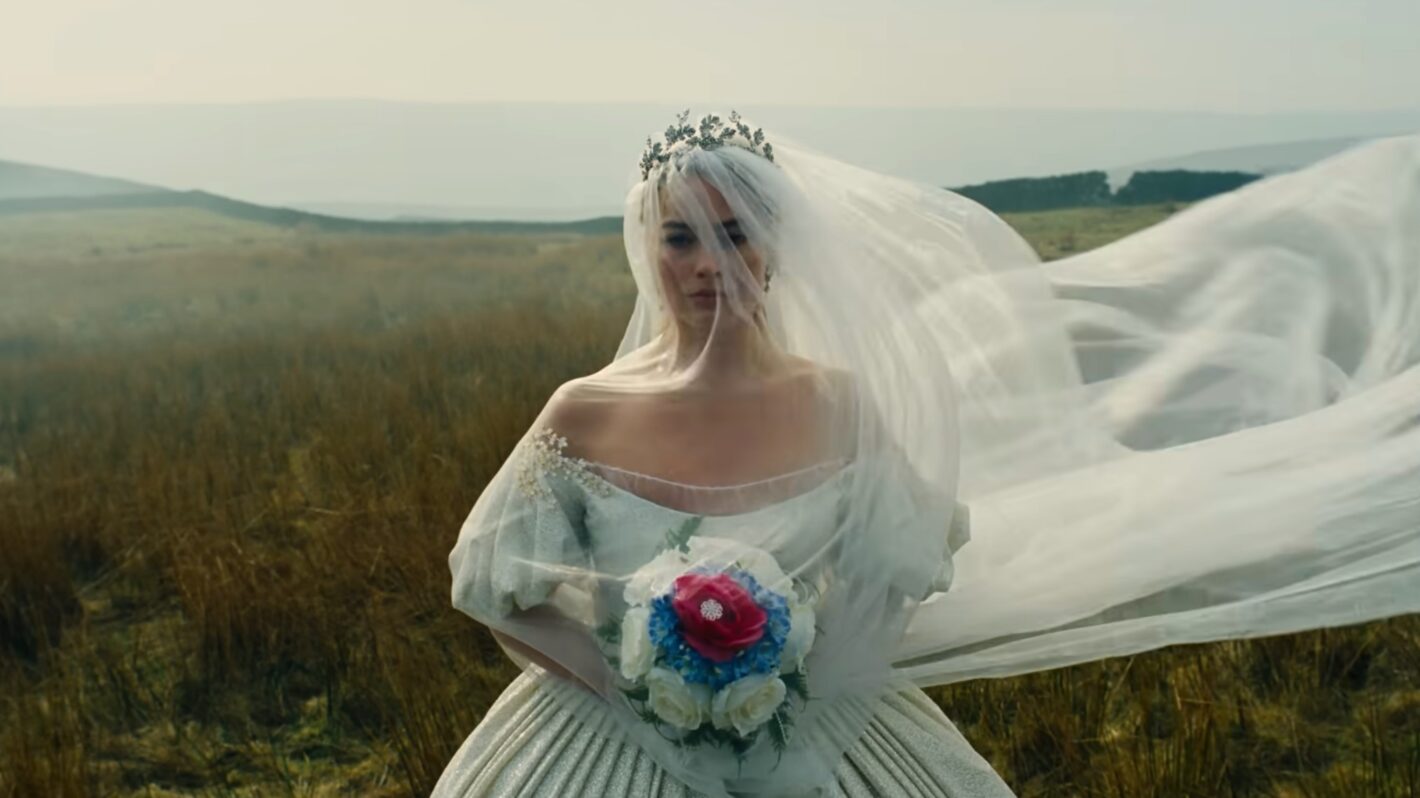
This Valentine’s Day, lit-nerds and Saltburn-fanatics alike are prepared to fall in love again and again with “Wuthering Heights” starring Margot Robbie (Barbie) and Jacob Elordi (Frankenstein). And yes, before you ask, the quotes are part of the film’s official title. As of January, we finally know why Fennell chose to frame the adaptation title in those seemingly random quotation marks. Spoiler alert: The title’s punctuation isn’t random at all.
Scroll to find out what those “Wuthering Heights” quotes mean, what Fennell has said about the unique title, and how the adaptation will be different from the Emily Brontë source material.
Warner Bros.
What do the quotation marks mean in “Wuthering Heights”?
Honestly, we can’t think of another book-to-screen adaptation or movie, period, that uses quotation marks around the full title. Sure, if we were writing an essay by hand in our high school English class and had to mention the Emily Brontë work, it would be grammatically correct to write the title in quotes. But, in any other scenario, using quotation marks in the title is a stylistic choice.
In a recent interview with Fandango, Fennell explained her choice to include quotation marks in the “Wuthering Heights” title, stressing that what she had made was an adaptation of the original work. Not a replica. For that reason, we can simply take the quotes to mean: Wuthering Heights (Emerald Fennell’s Version).
What has Emerald Fennell said about the “Wuthering Heights” title?
Talking to Fandango, Fennell revealed that she has been in discussion with the Brontë Parsonage Museum about the work and concluded that the novel takes on a different meaning for everyone who reads it.
She explained, “And I think doing a lot of talking to the Brontë Parsonage Museum and to other people who love this book too, because it means a lot to me, it’s very important that everyone who loves it as much as I do feels almost a part of it, I guess. But the thing for me is that you can’t adapt a book as dense and complicated and difficult as this book.”
When it comes down to it, Fennell decided, “I can’t say I’m making Wuthering Heights. It’s not possible. What I can say is I’m making a version of it. There’s a version that I remembered reading that isn’t quite real. And there’s a version where I wanted stuff to happen that never happened. And so it is Wuthering Heights, and it isn’t.”
View this post on Instagram
What is Emerald Fennell’s “Wuthering Heights” about?
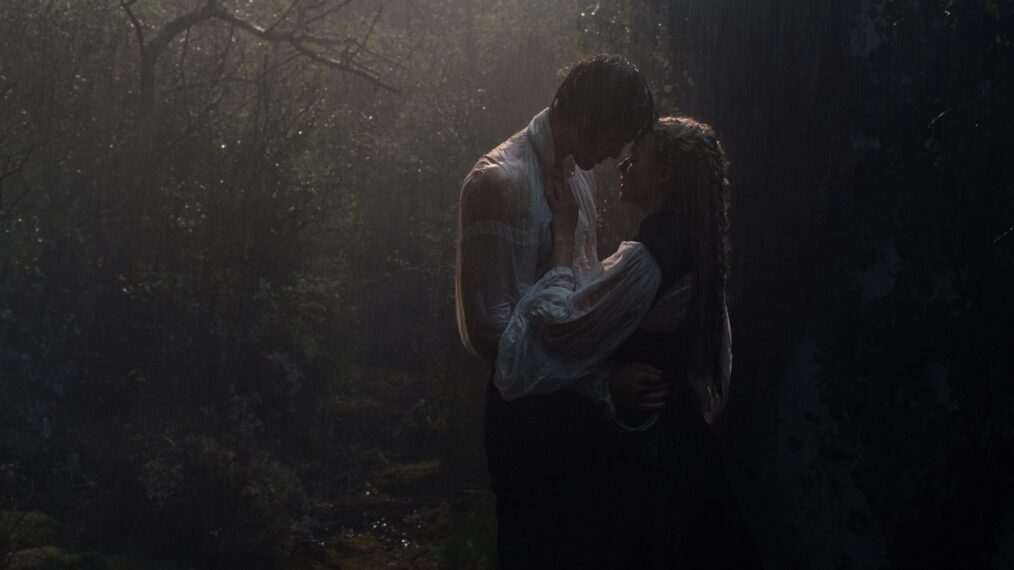
So, if Emerald Fennell’s “Wuthering Heights” is the story we all know and love, but it also isn’t, then what is it? The official synopsis explains that the film is “a passionate and tumultuous love story set against the backdrop of the Yorkshire moors, exploring the intense and destructive relationship between Heathcliff (Elordi) and Catherine Earnshaw (Robbie).” While that description maintains the framework of the original novel, we’ll have to wait until Valentine’s Day to find out for sure what Fennell’s interpretation of the work is.
“Wuthering Heights”, In Theaters, February 13, 2026