







Exclusive Interview
‘Cherry Baby’ Author Rainbow Rowell on Second Chances & Art Imitating Life in New Novel
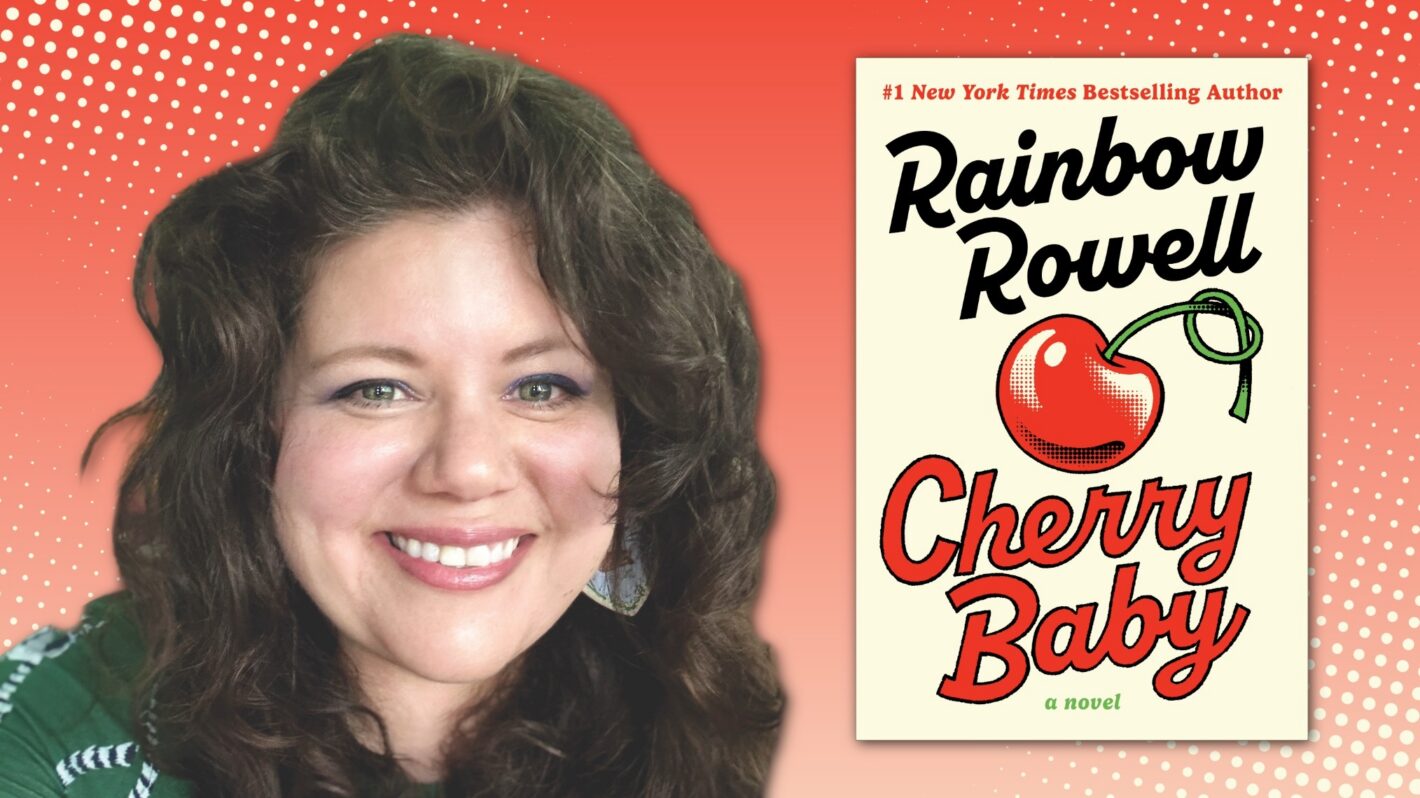
What To Know
- Rainbow Rowell’s new novel, Cherry Baby, was released on April 14.
- The book follows a woman named Cherry, whose life is turned upside down when her husband’s webcomic, featuring a character based on her, becomes a movie.
- Rowell spoke with Swooon about the pressures of fame on marriage, the inspiration for her latest novel, and more.
Rainbow Rowell explores the pressures of fame on marriage in her latest love story, Cherry Baby. The novel, out now, centers around the titular Cherry, a fat woman on the path to divorce from her husband, Tom. Ever since Tom’s semi-autobiographical online comics, in which Cherry is featured as the character Baby, have gone viral, they’ve both been catapulted into the limelight.
As a result, their marriage fell apart. Enter Russ, a former crush of Cherry’s who has made a reappearance in her life, and this time around is ready to make his feelings for her known. Two old flames have Cherry in their sights, but the question for Cherry is which route, if any, will make her truly happy.
Swooon spoke to Rowell about what throughlines she finds across her many love stories, including fan favorites such as Eleanor & Park and Fangirl, her own relationship with becoming a public figure, and why she believes all love stories are about second chances. (Spoilers ahead!)
This title, Cherry Baby, touches on the intersection between reality and fiction. How did that idea come to you?
Rainbow Rowell: This concept and this title came to me so early, I can’t even remember how it took shape. I’ve been working in comics for about 10 years now, so I’m sure I had that percolating in the back of my head. And I must have been thinking about my own experiences with success, and with borrowing from life to make art. Regarding the title — I think I had the chorus of “Cherry Cherry” by Neil Diamond in my head and thought, “Oh! Cherry could be the main character, and Baby can be the comic character …” I loved giving the main character a cute name that might make it hard for people to take her seriously. I’m realizing as I say this that it’s a theme in my own life.
We see what Baby represents to the public, but what does Baby mean to Cherry? And what does Baby mean to Tom?
Rowell: I think that Baby — the character in Tom’s comic who is based on Cherry — is sincerely beloved. But she also gets used in memes and jokes. And she’s a plus-sized character, so, for Cherry, Baby feels like an ongoing fat joke. Cherry feels like her husband is exposing something really vulnerable about her. Like, did he have to draw her with a double chin? What Baby means to Tom is one of the book’s mysteries. Cherry is afraid to ask.
There is the major question of the artist’s conundrum: What’s fair play to use in one’s life? From your perspective, do you have qualms about the way Tom utilizes his relationship in his art?
Rowell: I don’t think Tom can help himself. I don’t think most artists can help themselves. Art comes out of life. I wish that Tom and Cherry could talk more openly about what he’s doing and how she feels about it, but it’s become this untouchable thing between them. They’re both so afraid to be hurt or to feel guilty. Like, Tom doesn’t want to admit that he’s hurt Cherry. And Cherry doesn’t want to come between Tom and his art. I also think that Cherry is hiding from Tom’s success — and Baby — in ways that Tom can’t even see.
A major theme of this novel grapples with how fame can lead down a path to depersonalization. As a public figure, were there any experiences of your own that showed up in Cherry’s?
Rowell: Oh, definitely. The Internet is especially destabilizing because people truly don’t see other people online as real human beings. You’re just a thing there. And if you’re successful or famous, you’re a topic. I could feel this as a person with some success. But I have friends who are very, very successful, and the effects for them are even more extreme. It’s like your safe spaces in the world — where you get to be a real person — shrink. This is especially difficult for Cherry because it isn’t her success. Someone else made her famous. She feels completely out of control.
Both of Cherry’s love interests are men who can be categorized as part of her past. (Russ, a former crush, and Tom, her soon-to-be ex-husband.) You could describe this as a dual second-chance story. What do you appreciate about the concept of a second chance?
Rowell: I think that every love story is a second-chance story, because you have to forgive each other again and again to make it work. And you have to continually renew what you have together as you both change. I tend to write about couples who struggle. Even Eleanor and Park and Simon and Baz face serious problems. I find that sort of love story to be more meaningful and interesting — because it feels real to me.
Cherry recognizes what life down the line with Russ could look like and decides it’s not for her. What about that life did Cherry realize would be unfulfilling?
Rowell: I think that Cherry worries that she’ll never feel secure in Russ’ love. Russ has to work to admit that he finds Cherry attractive. He has to get married and divorced and go to therapy before he’s secure enough in himself to be seen with a plus-sized woman. Cherry acknowledges his growth … but she’s been with a man, Tom, who was never embarrassed with her. A man who always accepted her as she was. So, even if she doesn’t go back to Tom, she doesn’t want to be with someone who can’t fully accept her.
Tom and Cherry are both dealing with the fallout of the unexpected pressure fame can put on a marriage. What’s the most important lesson they come out of this story with?

Rowell: Cherry spent so much time retreating from Tom, and doubting his love for her — because she doubted that anyone could love her that way. She was always bracing to be hurt or let down. I hope that she’s learned she can believe him. That she can see herself as “a good thing.” And I hope that Tom has learned to speak up. He lets Cherry make the decisions and run the conversations, and that’s okay most of the time, but he absolutely has to step forward and speak up. She can’t read his mind, and she needs to hear what he wants and how he feels.
You’ve written about love across so many of your works. Are there any throughlines that show up in your projects?
Rowell: That’s a good question. I really like to show people working things out. The nitty-gritty parts of falling in love. The way people share space. And I like writing about the struggle of it. Seeing how people get through the hard parts. For me, the goal is always to make it feel real. (Even when I’m writing fantasy.)


