







‘Outlander’: Diana Gabaldon’s Love Letter to Her Book You May Have Missed
What To Know
- The penultimate (and 100th) episode of Outlander Season 8 was penned by author Diana Gabaldon.
- Gabaldon published the first Outlander book in 1991.
- The Outlander series finale is set to air on May 15.
Two things can be true at once. In this case, a gimmicky, cringe-worthy plot point in the series finale of Game of Thrones can send our eyes rolling to the back of our heads, while something similar (though far more poignant) in the penultimate episode of Outlander’s eight-season run can have us reaching for the tissues.
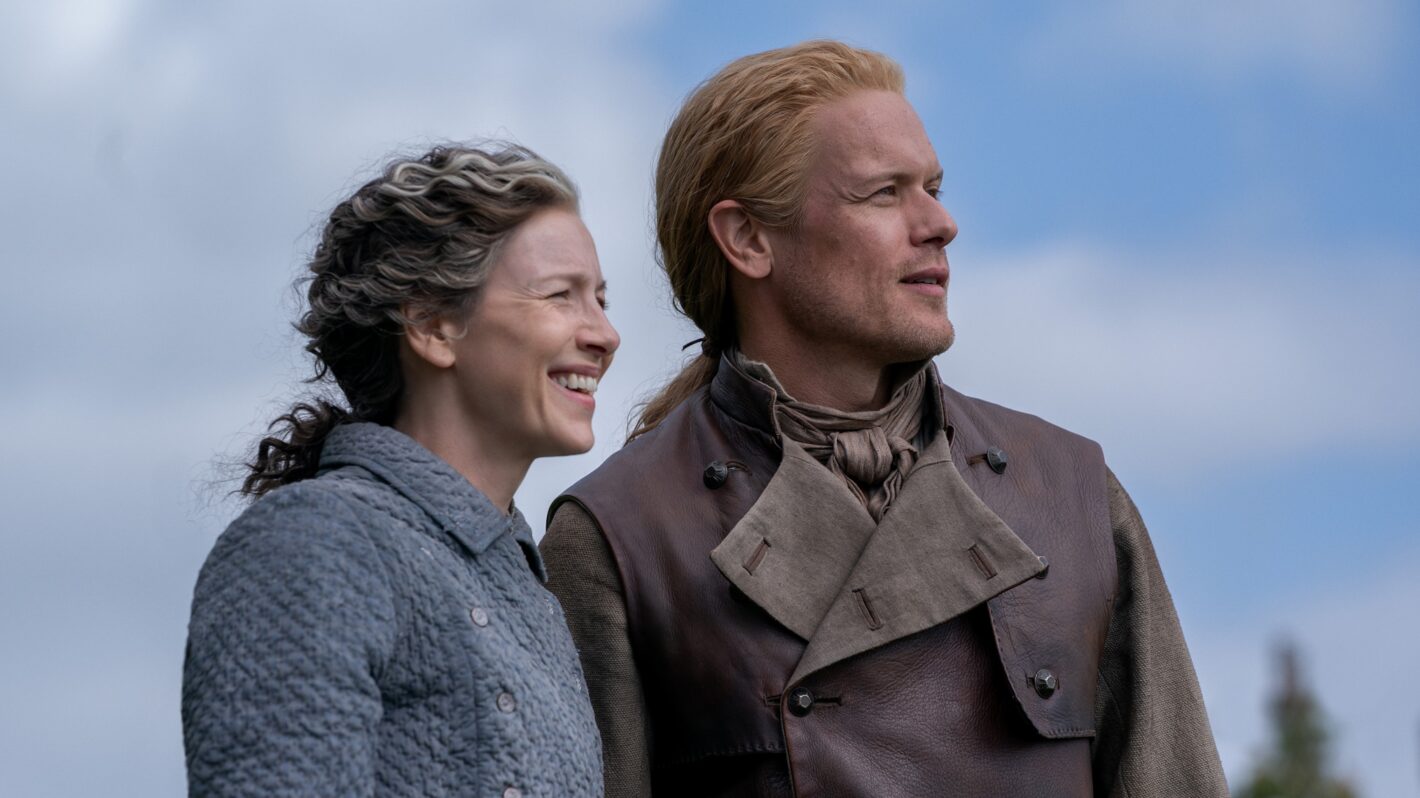
Let us explain: In the ninth episode of Season 8, Outlander author Diana Gabaldon pens her final episode of the series, her fourth in total. The hour, titled “Pharos,” is the show’s 100th episode and largely focuses on the rescue of Lord John Grey (David Berry), who has been kidnapped and threatened with the exposure of his identity as a gay man in Revolutionary War America. Once all of that dust has settled, though, Claire (Caitriona Balfe) and Jamie (Sam Heughan) find themselves with, perhaps, the last moment of peace they will enjoy before the end of the series. Curled up in their bed, Jamie finds Claire writing in a leather journal that she seems shy to share.
He wrestles it from her hands — though, has she or any woman watching at home ever really considered saying no to Jamie Fraser? — and reads the first passage aloud:
“People disappear all the time. Young girls run away from home. Children stray from their parents and are never seen again. Many are found, eventually. Disappearances, after all, have explanations. Usually.”
Starz
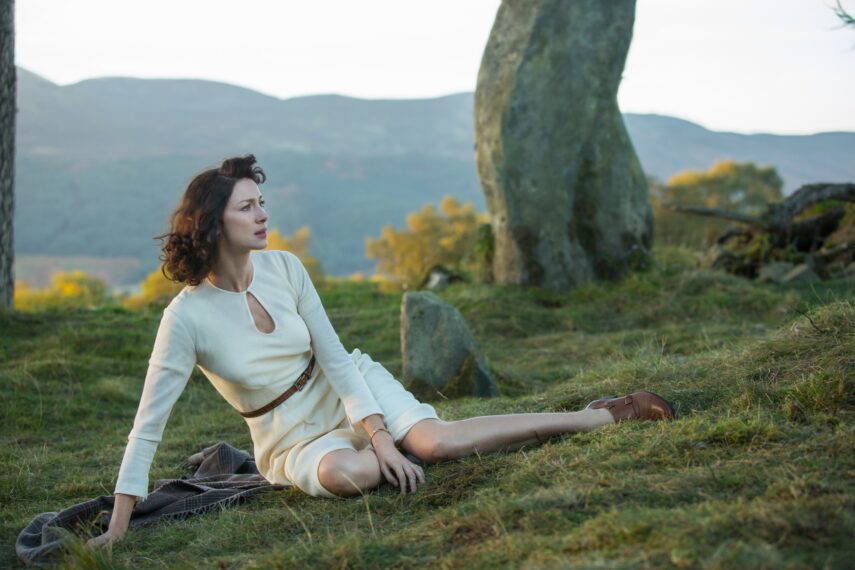
For fans of Gabaldon’s books, these words will ring like church bells in their ears. They are, after all, a shortened version of the opening passage of her first book, published in 1991. Hearing Jamie Fraser read those words is an immaculately satisfying experience for anyone who has read Gabaldon’s works as they hit the shelves or in response to their obsession with the TV series. It is almost as surreal as hearing the name Frodo Baggins leave his lips earlier in the season. But what Claire has written, seen in a brief glimpse on the page, is actually, word for word, the narration that opened the TV series in Season 1. Gabaldon’s original opening, below, was far more ripped from the 20th-century headlines, sharing sentiments that would be hard to explain to 18th-century minds should they come across it.
“People disappear all the time. Ask any policeman. Better yet. Ask a journalist. Disappearances are bread-and-butter to journalists.
Young girls run away from home. Young children stray from their parents and are never seen again. Housewives reach the end of their tether and take the grocery money and a taxi to the station. International financiers change their names and vanish into the smoke of imported cigars.
Many of the lost will be found, eventually, dead or alive. Disappearances, after all, have explanations.
Usually.
Claire’s version, which dovetails into a more personal lament about a life lived (so far) without a vase, feels cut from the same cloth as the TV adaptation, and is only as modern as its reference to a train station. Nevertheless, Claire using these words again, only this time as some philosophical reckoning with the extraordinary feat of her life, is intensely moving. As is the way Balfe plays her reaction, as both bashful and hesitant to hear them read aloud.
But why does it work? It shouldn’t. At least, that’s what history tells us. In the aforementioned Game of Thrones series finale, a character assumes the role of Grand Maester, essentially the historian of the fictional land of Westeros. In his new role, he writes about the events of the series in a tome titled “A Song of Ice and Fire,” the name of the author George R. R. Martin’s first book, on which the TV series was based. In essence, George’s role as the architect of his world is immortalized within it. In the middle of a much-maligned finale, this little nod to the show’s origins falls flat, in part, because it feels about as subtle as dragon’s breath in its attempt to deify Martin’s work, a commendable feat nevertheless.
The case could be made that Claire’s embrace of Gabaldon’s text is far more successful for a few reasons. One, Gabaldon’s books are told from Claire’s perspective, meaning her words have always been the text for book readers. They belong to Claire as much as they do to Gabaldon. But far more important to the TV series is Gabaldon’s role as the scribe behind this penultimate episode. She is the one who gifts her words to her main character to use as a means of understanding the twisted trajectory of her life. By granting Claire these words, she gives her the insight to understand her place in time, the hindsight of her chosen circumstance, and the foresight to embrace the healing power of wrapping your arms around your own story.
In a way, Gabaldon wrote a love letter to those who have held fast to her words and the power they’ve had for 35 years.
It’s a multifaceted full-circle moment, and Jamie says as much when he offers his take upon reading Claire’s work: “It’s a hell of a beginning.”
Maybe only those who have stuck with the books and the TV series will appreciate and feel the magnitude of the moment. But knowing Gabaldon gave her blessing to it makes it feel transcendent, in the most sincere way this show can be. You know, until the series finale completely descends into inevitable heartbreak and pain. We will take the magic when we can get it!
Outlander, Season 8, Fridays, 8/7c, Starz


