






Exclusive Interview
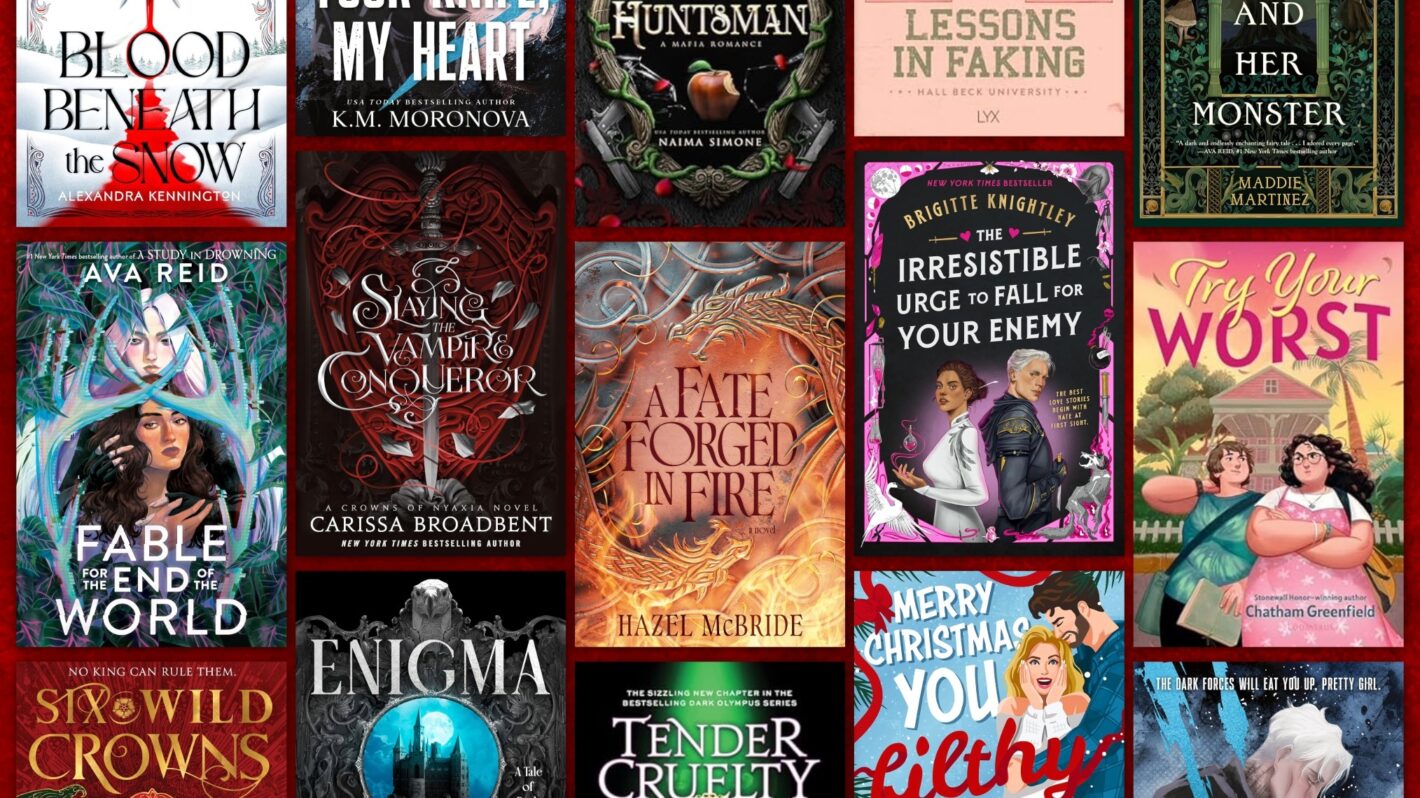
Inside Katee Robert’s ‘Tender Cruelty’ & Their Plans for Ending ‘Dark Olympus’ Series

What To Know
- Katee Robert’s ninth Dark Olympus novel, Tender Cruelty, was released on December 2.
- Tender Cruelty finally puts Hera and Zeus at the forefront, exploring their tumultuous relationship as they unite against a common threat to Olympus.
- Robert spoke with Swooon about Zeus and Hera’s romance and how they’re preparing for the tenth and final book in the series.
Dark Olympus fans, this is the one you’ve been waiting for. In Katee Robert’s ninth installment in their Dark Olympus series, Tender Cruelty, out now (and one of our top romance picks of December), takes a sexy twist on the myths of the Greek gods, and Hera and Zeus are finally taking center stage.
Originally introduced in the book series’ second novel, Electric Idol, Hera has been spotted across the subsequent novels attempting to murder her powerful husband, whom she married to protect her family. Despite these attempts that are a bruise to the ego, Hera and Zeus have obligations as the most powerful gods of Olympus; they must prepare an heir and a spare, and despite their open hostility to one another, they are more than compatible in the bedroom, though neither wants to acknowledge what that means. When an old threat makes a reappearance that threatens to upend the world as the gods know it, Zeus and Hera have no choice but to come together to defeat a common enemy, whether that means returning to the ways of the old gods or forging a new path forward.
We spoke with Katee Robert about the long wait for Zeus and Hera’s book, the power dynamics behind Olympus’ most powerful couple, their feelings about preparing to say goodbye to the series, and what readers can expect from the forthcoming series conclusion.
The ninth installment in a romance series is an incredible feat. Can you talk about your evolution as a writer throughout the series? Are there things that you’re willing to try now that you maybe wouldn’t have at the start?
Katee Robert: It’s very interesting because this series is one of those that it’s funny to talk about now. It’s financially successful, the sales are doing well, but at the time [while pitching the books] we could not sell it anywhere, and I had fully intended for the first three books, if it doesn’t work out, it doesn’t work out. I would cut the series and do a spinoff. But it ended up being one of the better editorial partnerships of my career, and that my editor is constantly like, “Cool! Yes!” This series is the first time I’ve ever done a four point of view polyamorous romance. It’s the first time I’ve done so many different things, especially within a traditional series. So it gave me a lot of confidence as far as to be like, “Oh, this is something that can sell and that can do well.” It’s amazing how that works, if you know you have the support of the machine behind you. It definitely taught me to take bigger swings, because there’s no reason not to.
This book has been highly anticipated by readers of the series. You even dedicated the book to “every single person who cursed me for Zeus and Hera being Book 9 instead of Book 3.” Why the wait with this couple?
Robert: The main reason is because Zeus and Hera have one of the most tumultuous, toxic, terrible relationships in Greek mythology. And if I was going to give them a happily ever after, it felt like it would have cheated us out of some of those tumultuous ups and downs if they had their happy ever after too soon. The other element is that some of my favorite authors do this thing where they feed us bits and pieces. And so I feel like, if it’s done well, it amps up the satisfaction. We’ve seen her trying to murder him, we’ve seen him step into his father Zeus’ shoes, and fail multiple times. I feel like if we didn’t see that, it wouldn’t be as satisfying to see them find each other in these end days of Olympus.
The role of a god is really important when it comes to these characters. How does the history of the role of Hera, a wife and often forgotten figure to Zeus, impact Hera’s desire for power and the political power within her marriage?
Robert: That was very much influenced by just myth. The general public thinks of Hera and is like, “Oh, Zeus’ jealous wife who punishes people.” I wanted to reflect the Hera role within Dark Olympus, and that it’s been pushed to the side. Hera has become a role that’s just an accessory to Zeus, so this Hera is going back to her roots a little bit, and devoting resources to the orphanage, and that gives her people who are loyal to her specifically, and allows her to create this corner of power that’s just hers and is unattached to her husband. And I think that was important, even if she chooses to stay married to him, she still has her space that is not just like an extension of her spouse.
For Zeus, readers through the series will have seen how cutthroat Zeus can be as a leader, and this is a rare peek into the man behind the crown, per se. What did you want to play with when it came to the public perception of Zeus versus Zeus as a husband?
Robert: On a power level, he is detrimentally affected by the fact that he wants to be a good man, and so he wants to bring the Thirteen [the group of gods who rule over Olympus] together. His aspirations are pretty positive and would benefit the city, at least as far as he understands it. But in the way of myth, he has inherited all of these political pushes and pulls and enemies and people who just won’t work with him because somebody had an issue with his father. So his journey is [the question of] if he’s not Zeus, who is he? And if he is Zeus, he has to be Olympus’ monster. So, where is the line between him and his father? Because his father was a very terrible man, but a very good Zeus, as far as he kept everybody in line. But he also allowed for some really awful things to happen under his rulership. And so Perseus [in the role of] Zeus stepping into that role really highlights why that system of power doesn’t work. Because it only works when it’s corrupt, and if you try to do it the right way, it instantly falls apart. His internal struggle is very much he’s been groomed from birth to be Zeus. And if he’s a bad Zeus, then what is his purpose in life?
Enemies to lovers often acts as a mirror for the characters. In what ways do Hera and Zeus reflect one another?
Robert: Both Zeus and Hera are very much family guys. Hera is more honest about it, at least initially, in that she’s like, “Anything to protect my family.” That’s why she became Hera to begin with. Every step of the way is to protect her family and herself. Whereas Zeus is Olympus first, family second. But as the series goes on, we see he puts Hera in this role that she did not want, but then he’s kind of relieved that it worked out the way it did. So choosing his family, which eventually encompasses Hera, over Olympus is a thing that he has to really grapple with. They both have values, but their values are taking them in different directions, even though the value system is really similar.
And also, throughout the book, it became [bonding over] that feeling of being people punching above their weight. They’re two of the most powerful people in this city and in this universe, but they are still punching above their weight when it comes to dealing with the systematic structures. The fact is that these structures created [antagonist] Circe, who now they can’t deal with because they’re still working within the structures that were broken to begin with. The accumulation of the enemies turning into lovers for real is them realizing they are actually the only two people in this particular trench together, and no one quite understands except the two of us.
What was the swooniest scene of this book?
Robert: I really love the moment on the balcony where Zeus is so fed up with everything, and he’s like, “Cool, like, you want to do this? Shove me off the damn balcony!” And Hera having to admit, “I don’t actually want to murder you, even though I’ve spent several books trying to do just that.” That scene in particular sticks out to me so much and just encompasses everything so nicely. What I swoon over occasionally is sex scenes, and I’m like, oh my gosh, clutch the pearls. But usually it’s moments where things shift. The before and after moments in a relationship.
We love in-universe references and appearances to old characters we’ve seen before. Were there any reappearances you were particularly excited about writing or are excited for fans to see?
Robert: There’s a conversation with Hercules. He’s part of the Wicked Villains series because he left Olympus, and he went to Carver City. We’ve seen references to him specifically in Helen and Eris’ books, of them being like, “He’s gone. He doesn’t come around anymore. We don’t talk to him.” But having Perseus as Zeus tell them, “I’ve been reaching out. Sometimes they talk, sometimes they don’t,” and [then he gets to have] this incredibly vulnerable conversation with his little brother, who’s escaped the bad stuff, the sibling who shucked off the generational trauma first. And Zeus gets to say, “I don’t know how to do this. I don’t know how to be a father when all we had was that guy as our guy.” I find it really healing, just in general, [the idea that] nobody knows what they’re doing. We’re all messed up. And [for Hercules to acknowledge that] wanting to do your best means Zeus is already several steps ahead of their dad. That moment was a nice bookend. Hercules is doing just fine. But also, in the Dark Olympus world, to button their brotherly relationship up a little bit.
This is Book 9 and readers are dying for the tenth installment. What can you tell us about it? How are you feeling about sending this series off?
Robert: It’s bittersweet because when I initially had the big plot arcs for this series, it was only nine books. And then the moment Hermes [the focus of forthcoming novel Shattered Gods] showed up, I was like…and you are the ultimate. I’m really excited for people to read it, but it was really hard to wrap it up. There are several moments in the tenth book that just feel like saying goodbye, as far as like, let’s touch on these characters and let’s sum this [storyline] up. It feels like a lot of pressure. The spoilers for the trio are in the blurbs for Shattered Gods, for anyone who would like to be spoiled. It’s definitely one of the harder books I’ve written, just because the dynamics are so complicated. I had a lot of fun, but it was really hard.