







‘Wuthering Heights’: 10 Biggest Book-to-Movie Changes in 2026 Adaptation
What To Know
- Director Emerald Fennell has released a new adaptation of Emily Brontë’s Wuthering Heights.
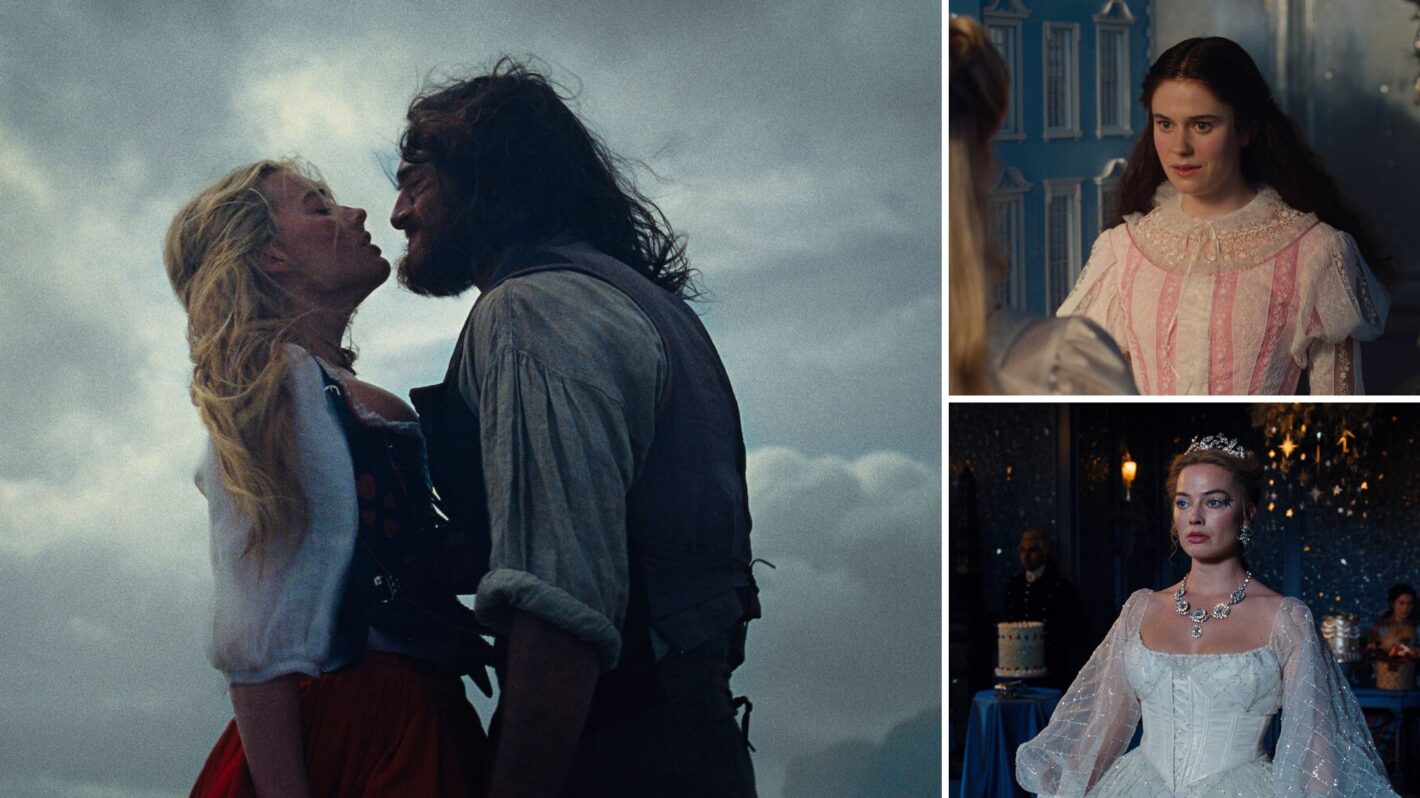
- The new movie stars Margot Robbie as Cathy and Jacob Elordi as Heathcliff.
- This version of Wuthering Heights makes significant changes to character backgrounds and relationships, notably casting a white actor as Heathcliff, altering Hindley’s role, and reimagining Mr. Earnshaw.
[Warning: The below contains MAJOR spoilers for “Wuthering Heights”.]
Unless you’ve been living under a rock with zero 5G and absolutely no group chats, you’ve probably heard a lot about “Wuthering Heights” lately. Some of us stumbled out of the cinema with mascara streaks and emotional damage. Others walked out muttering about everything the movie didn’t include from Emily Brontë’s book. And honestly? Plenty of us fall into both camps — longtime Wuthering Heights readers who still fully lost it over that rock-on-the-moors moment.
As it turns out, there are quite a few differences between the book and the film — and yes, somehow the Emerald Fennell adaptation is actually less disturbing than the original. (If you know, you know.) There’s a reason it’s an adaptation and not a page-for-page reenactment because Fennell took some bold liberties with the source material.
So, grab your emotional support tea and let’s break down all the biggest changes between the Wuthering Heights book and the movie adaptation.
1. Heathcliff’s appearance
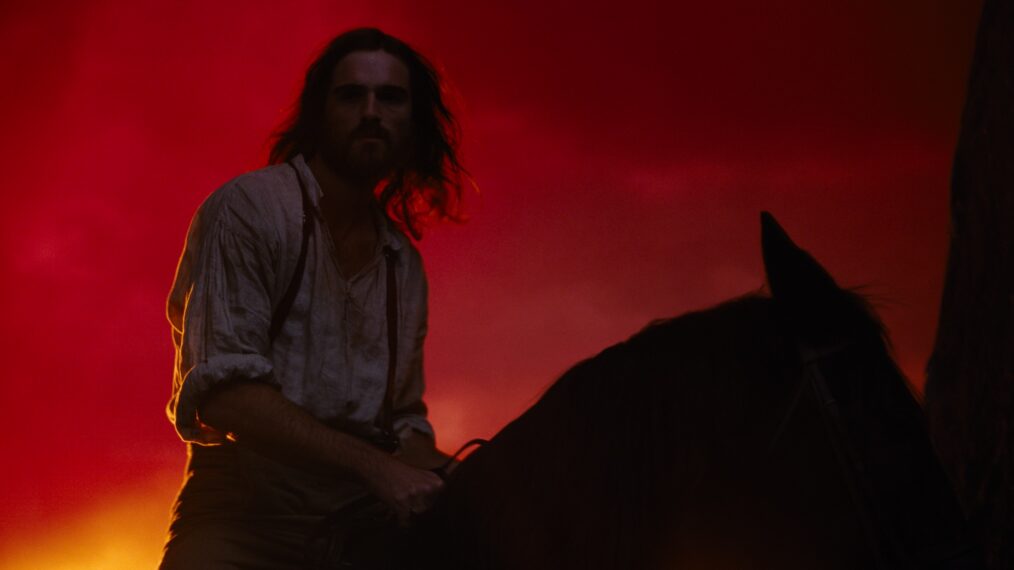
Now this is the change you’ve probably already heard about because people have been debating it nonstop since the casting announcement dropped. Yes, Jacob Elordi plays Heathcliff, and, well… some fans feel like he maybe shouldn’t have. Sorry!
Warner Bros.
In the movie, Heathcliff is portrayed as an unnamed boy rescued from an abusive father before ending up under the equally miserable roof of Mr. Earnshaw. But in the Wuthering Heights novel, Heathcliff’s origins are intentionally mysterious. He’s discovered in Liverpool, and Emily Brontë gives several clues suggesting he isn’t white.
Mr. Lockwood describes him as “a dark-skinned gipsy,” leading some readers to interpret him as Romani. Mr. Linton calls him “a little Lascar, or an American, or Spanish castaway,” with “lascar” referring to South Asian sailors who often worked for England’s East India Company. Nelly Dean even tries to comfort him by imagining grand possibilities for his parentage, saying, “Who knows but your father was Emperor of China and your mother an Indian queen.”
Scholars — including English professor Gaura Narayan — have argued these descriptions point to Heathcliff being of South Asian descent, while others connect his characterization to Liverpool’s history as a major port tied to the transatlantic slave trade, suggesting he could also be read as Black.
Basically: The novel makes it pretty clear that Heathcliff is not white, and that his outsider status — including the prejudice he faces — shapes his entire story. Which is why casting Elordi, a white Australian actor, sparked such strong reactions.
Fennell has said that Elordi reminded her of the figure on the cover of her childhood copy of Wuthering Heights. It’s also worth noting that she uses colorblind casting elsewhere in the movie, with supporting roles like Nelly (Hong Chau) and Edgar (Shazad Latif) portrayed by actors of color.
2. Cathy’s brother
Another major change? The whole Heathcliff name origin story.
In the film, Cathy (Margot Robbie) suggests naming the boy Heathcliff after her deceased brother, and the name sticks. But in Wuthering Heights, Cathy’s brother is very much alive… and his name is Hindley, not Heathcliff.
And trust us: Hindley is kind of a huge deal in the original story.
In the novel, Hindley plays a central role in shaping Heathcliff’s tragic arc. After inheriting Wuthering Heights, he treats Heathcliff with outright cruelty, stripping him of his education and forcing him to work like a servant. It’s a deliberate act of dehumanization — one that pushes Heathcliff further into outsider status and creates the social divide that convinces Cathy it would “degrade” her to marry him.
Hindley’s downward spiral into alcoholism and gambling also becomes a key turning point later on, since he’s ultimately the man from whom Heathcliff gains control of the house. In many ways, Hindley’s resentment is the engine driving the novel’s cycle of revenge, and even the reason Cathy and Heathcliff can’t be together in the first place.
By removing or reshaping Hindley’s role, the movie simplifies a major source of tension and tragedy that gives the book so much of its dark emotional weight.
3. Mr. Earnshaw
If you’re feeling a little confused right now, fair enough. If Hindley is supposed to be doing all the damage, then what exactly is Mr. Earnshaw — Cathy’s father (Martin Clunes) — doing in the movie?
In the film, Mr. Earnshaw is reimagined as a volatile, self-indulgent man who drinks heavily, gambles away the family’s fortune, and swings unpredictably between affection and cruelty. He brutally beats Heathcliff, and those moments are used to highlight just how fiercely Heathcliff protects Cathy — even telling her after one beating, “I will take this and more every day if it spares you.” The movie positions him as the main obstacle to their relationship, pushing the family toward ruin and leaving Cathy desperate enough to pursue the wealthy Edgar for security.
But in Wuthering Heights, the novel? It’s a completely different story.
There, Mr. Earnshaw actually adores Heathcliff, arguably even more than his own (very much alive) son, Hindley. That favoritism is exactly what fuels Hindley’s resentment and sets their rivalry in motion. Rather than spiraling into chaos, Mr. Earnshaw dies peacefully with Catherine at his side, a quiet moment that contrasts sharply with the film’s far more dramatic version where Cathy misses his death entirely and, yes, kicks the corpse. (Yikes, indeed.)
By shifting Mr. Earnshaw from a loving protector to a destructive antagonist, the adaptation dramatically rewrites the family dynamics that drive much of the novel’s tragedy.
4. The wealth of the family
The movie also makes one major change to Cathy’s motivation for marrying Edgar, and honestly, it reframes the entire “great” love story.

Warner Bros.
In Fennell’s version, Cathy marries Edgar because her family is flat-out broke. We’re talking can’t-even-afford-to-light-a-fire levels of poverty. There’s a key scene where Heathcliff, furious at seeing her shivering, smashes a chair just to burn it and keep her warm. Cathy brings money home, only for her father to waste it. Eventually, Heathcliff buys the house himself once he earns his own fortune.
But in the novel of Wuthering Heights, things aren’t nearly that dire — at least not at first. The Earnshaws aren’t wealthy, but they’re not living in complete ruin either, and their financial decline happens after Cathy marries. Which raises the question readers have been asking for generations: If survival wasn’t the issue… why did she choose Edgar?
The novel suggests Cathy’s decision is tied more to status and social ambition than sheer necessity, making her choice messier — and, for some readers, more frustrating. The movie shifts this dynamic by leaning hard into financial desperation, which conveniently casts less doubt on her love for Heathcliff and makes her marriage feel more like a sacrifice than social climbing.
In other words, the adaptation softens Cathy’s moral complexity, turning a complicated romantic decision into something far easier to sympathize with.
5. Their ages
This one also blew up after the casting announcements. Elordi was 28 and Robbie 35 when filming began, while younger actors handled the flashbacks — remember, Heathcliff and Cathy are just 7 when the novel kicks off. In the book, Catherine marries Edgar at 17 and dies shortly after giving birth at 18. Fennell, however, decided to age up the characters for the movie, putting them in their late 20s and early 30s, because, obviously, she wanted these actors.
Sure, it makes sense from a casting perspective… but it’s not exactly historically accurate. The novel is set in 1801 (published in 1847), when people married and had children much younger — lifespans were shorter, and dying prematurely was a very real risk. Aging up the pair gives the story a modern romance feel, but it definitely smooths over some of the high-stakes urgency that made Brontë’s version so intense.
6. The baby
The new adaptation takes one of the biggest heartbreaks and turns it up to full tragic-girl energy. Cathy miscarries and dies after a spiral of depression and starvation, her body overtaken by septicemia. The baby is lost, and Heathcliff rushes to her side… but, of course, he’s too late. The two are pictured in a final embrace that mirrors a scene from their childhood, making it visually breathtaking but gut-wrenching.
In the novel, things play out differently, and arguably even darker. Cathy does give birth to her daughter, also named Catherine, who goes on to have her own long and twisted storyline. Cathy dies in childbirth, and her death sets off Heathcliff’s decades-long campaign of revenge, making the novel’s emotional fallout far-reaching and morally complicated.
The movie condenses all of this heartbreak into one cinematic gut-punch, trading the generational drama of the book for an intensely personal, visual tragedy.
7. The plot
Like most movie adaptations of Wuthering Heights, the story ends with Cathy’s death, because, of course, once she dies, so does the romance. But the novel? Oh, honey… it does not stop there.
First off, Brontë lets their love linger beyond the grave. Cathy haunts Heathcliff, and his obsession with the woman he could never have continues to drive him for years, proving that some love stories are truly eternal… and terrifying.
Second, the novel introduces the next generation. Cathy dies halfway through, but her daughter — also named Catherine — lives on. In “Volume II,” the drama multiplies as the cycle of parental abuse gets passed down. Cathy II and her cousins — Hindley’s son, Hareton, and Heathcliff and Isabella’s son, Linton — get tangled up in the same toxic patterns.
Yes, you read that right: Heathcliff literally uses his dying son as bait to trap Cathy II at Wuthering Heights, coercing her into marrying Linton. Sick twist: They’re first cousins.
Eventually, Linton dies, and Cathy II falls for her other first cousin, Hareton. When Heathcliff finally dies and is buried next to Cathy as he always wanted, the surviving generation steps into a slightly happier future: Hareton and Cathy II inherit the Grange and even set a wedding date.
So, while the movie wraps everything up in one tragic swoon, the novel stretches the drama across decades, proving that in the world of Wuthering Heights… heartbreak is basically hereditary.
8. Isabella
Let’s talk about Isabella because her storyline gets wildly different in the adaptation.
Warner Bros.
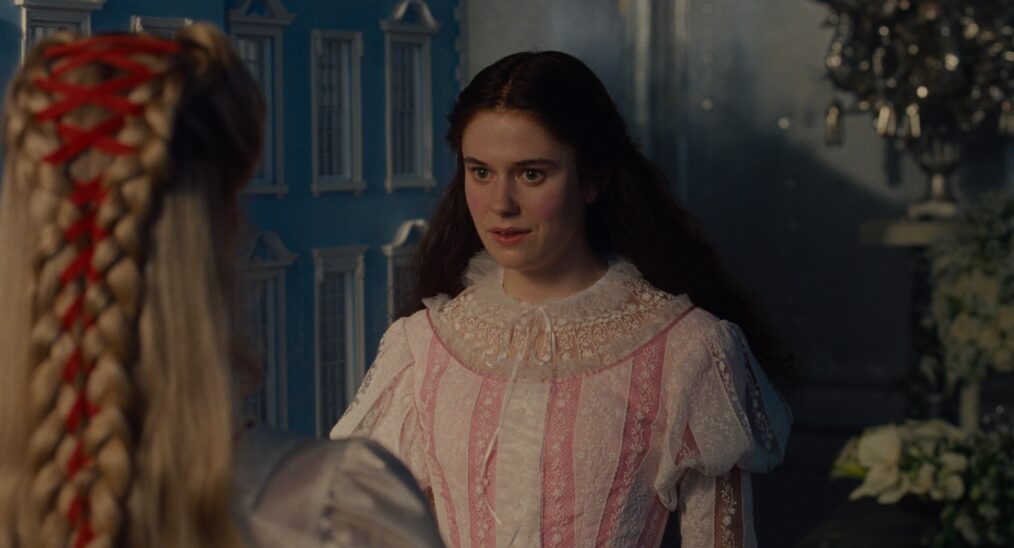
In the novel, Heathcliff tricks Isabella into eloping as part of his master plan to inherit the Grange and spite Edgar. Once they’re married, his true nature comes roaring out: He terrorizes her, hangs her dog (yes, really, and probably the inspiration for that shocking dog play scene in the film), and drives her to write desperate letters to Nelly, asking, “Is he a devil?” It’s pure psychological abuse, and Isabella’s letters are her lifeline, a cry for help.
The film, however, flips it on its head. Isabella (Alison Oliver) is depicted as complicit, almost dedicated to her role as Heathcliff’s submissive. She consents to the situation multiple times before marrying and refuses to leave him, a major departure from the novel. In Brontë’s original, Isabella escapes to London, raises her son, Linton, and lives out the rest of her life away from Heathcliff’s cruelty.
fSo while the movie turns Isabella into a tragic yet willing participant, the book reminds us that she has agency, survival instincts, and a life beyond Heathcliff’s manipulations.
9. Joseph
Who?! Yes, that hot servant who hooks up with the housemaid… in the stables… with farm equipment. If you saw the movie, you definitely remember him. In Fennell’s version, Joseph (Ewan Mitchell) has a full-on, consensual BDSM fling — and the movie doesn’t shy away from it.
The book? Oh, honey… completely different vibe. Joseph is a self-righteous zealot who’s constantly preaching from the Bible, the ultimate killjoy. He’s basically an avatar for the austere, moralistic forces trying to tame the wild chaos of Wuthering Heights. Romantic stables? Not in his world.
So yeah, the movie turns one of literature’s most boringly pious characters into a very memorable, very steamy cameo.
10. The sex of it all
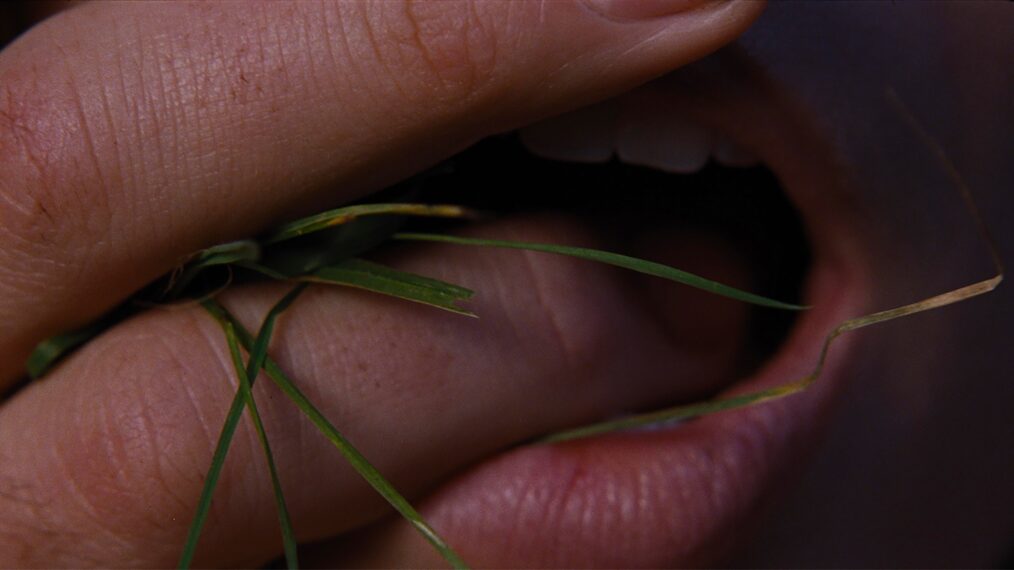
It should come as no surprise that in the novel, Heathcliff and Cathy don’t actually have sex. Yep. Not once. The closest they get? Heathcliff digs up Catherine’s grave twice. (We told you: The book is delightfully weird.)
Warner Bros.
The movie, on the other hand… well, let’s just say it’s not shy about the heat. Heathcliff accidentally catches Cathy masturbating — hot — and then things escalate. They get it on across the moors, in the carriage, even on her dining table while her husband sleeps upstairs. Not that anyone’s complaining.
In short, the novel is all simmering obsession and gothic weirdness, while the movie unleashes the sexual tension in full, cinematic glory.
What’s your “Wuthering Heights” hot take? We’d love to hear it in the comments!
“Wuthering Heights”, In Theaters


